
The Definition from ra uru hu
Purchase is processed securely via Jovian Archive
When you buy through this page, you also support the ongoing creation of deep Human Design resources on IConnectSmart – at no extra cost.
The Story We Were Told Is Too Small
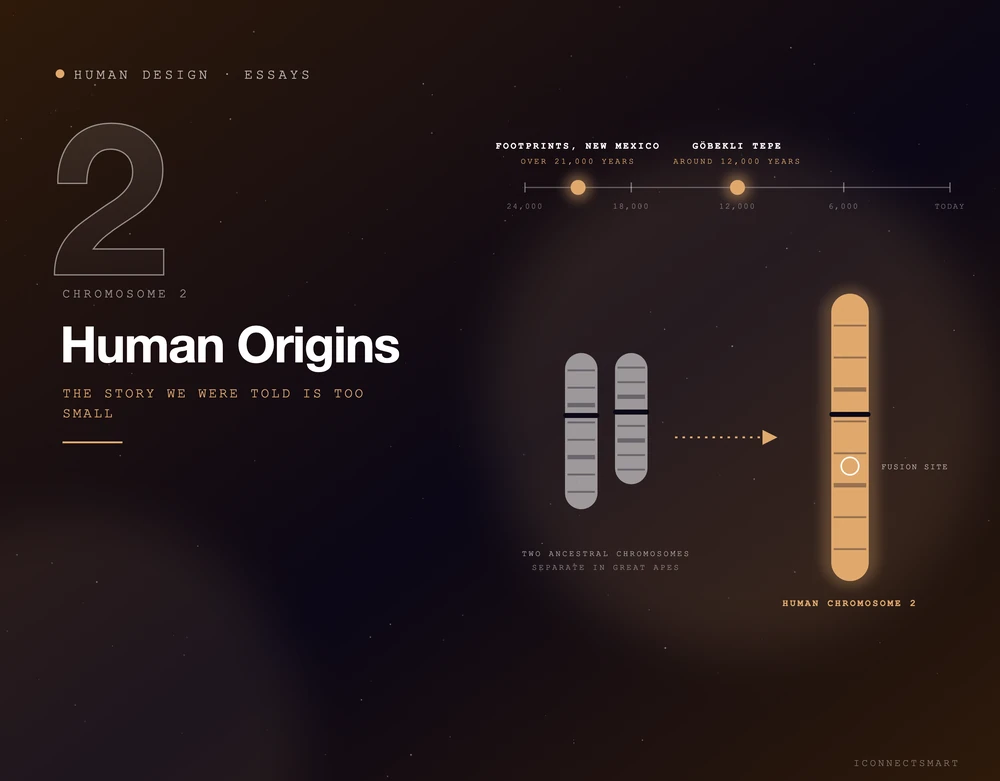
Stand at Göbekli Tepe and the story you were taught starts to wobble a little. Massive carved pillars, arranged with real intention, built by people who supposedly hadn’t invented farming yet. It’s real, it’s dated, and it doesn’t fit neatly into the tidy arc most of us grew up with: apes, ice ages, slow accidental progress, civilization arriving right on schedule once we’d finally gotten smart enough.
That wobble deserves an honest look, instead of either dismissing it or running straight to the most dramatic explanation available.
Precision is the whole point of taking this seriously, so let’s be precise. Göbekli Tepe really is around 12,000 years old. It really does show coordinated labor and symbolic sophistication that surprised the archaeologists who found it.
What it doesn’t require is ancient astronauts or a lost hyper-advanced civilization. What it does require is admitting that hunter-gatherers were capable of more organization and meaning-making than the old model gave them credit for. That’s a real correction to the story, and a smaller one than the dramatic version wants it to be.
The footprints in New Mexico tell a similar kind of story. Radiocarbon and luminescence dating place them at over 21,000 years old, which does push human presence in the Americas back further than the long-standing model assumed. That’s a genuine finding, still being debated by specialists, still working its way through peer review and replication.
It is evidence that the timeline needed adjusting, and it is not evidence that the timeline was hiding something.
This distinction matters more than it might seem to. An anomaly that revises a model is completely different from an anomaly that breaks it open into mystery. Most of what gets called evidence for a “hidden history” is the first kind, real findings that push a date back, correct an assumption, or complicate a picture, dressed up rhetorically as the second kind because mystery sells better than revision.
Chromosome 2 and the speed of the human mind
Take the genetics, since this is where the claims get the most specific and the most checkable. Human chromosome 2 really is the product of an ancient fusion of two ancestral chromosomes that remain separate in other great apes. That part is accurate.
What’s not accurate is calling it unexplained. Geneticists can point to the fusion site directly, the vestigial telomere and centromere sequences are still visible in the DNA, and it’s one of the better-understood chromosomal events in primate evolution. It’s fascinating, and it already has an answer.
The pace of human cognitive development is a fairer place to feel puzzled, because this one is more legitimately open. The jump into full language, abstract reasoning, and symbolic thought did happen faster than a strictly gradual model would predict, and researchers are still working out why. It might have been a single genetic shift, a slower cultural buildup that just looks sudden in the archaeological record, or some combination neither camp has fully mapped yet.
This is real, active science. You can be curious about it without needing to import an outside intelligence to explain the gap. Not knowing the mechanism yet is different from needing a more exotic one.
So where does this leave the “we were engineered” thread that shows up across old texts and modern speculation alike? It is a real pattern in human storytelling, and it deserves to be taken seriously as a pattern, but a pattern is not evidence. Cultures across the world telling similar stories about gods shaping humanity tells you something true and interesting about how humans make meaning out of their own origins.
It doesn’t, on its own, tell you what happened biologically. Those are two different questions, and collapsing them into one is where a lot of otherwise careful thinking goes sideways.
The hard problem of consciousness
Now to the place where the ground does get uncertain. It deserves real time, instead of being rushed past for something flashier.
Nobody, anywhere, in any lab, has a working explanation for why there’s something it feels like to be you. How your brain processes information is a different question, and that one is well underway and understood in broad strokes. The mystery is why any of that processing comes with a felt, inside experience at all, instead of just happening in the dark, mechanically, with nobody home to notice it.
This is called the hard problem of consciousness, and calling it unsolved is not fringe speculation. It is the accurate, mainstream description of where the field stands.
Some serious thinkers, working inside real physics and philosophy departments and not on the outskirts, are taking seriously the idea that consciousness might not be something the brain produces so much as something the brain interacts with. It is not proven, and it is contested. But it is a live, respectable position, held by people who have done the homework, and it is a real question sitting inside science instead of a rejection of it.
If that idea turns out to hold up, it doesn’t hand you an origin story about ancient intervention or hidden civilizations. What it does is quietly change the shape of the question you’re even allowed to ask. Instead of only asking how neurons happened to generate awareness, you’d also get to ask why awareness is expressing itself through a body shaped like yours, at this moment, doing the things you’re doing right now.
That’s a different question, and it’s one that current science doesn’t have the tools to answer yet. That is not the same as science having already answered it and you not liking the answer.
The throughline to carry with you is the only version of this that holds up under real scrutiny instead of collapsing the first time someone checks a source. The story most of us were handed is incomplete: the timeline keeps needing correction, the pace of our own cognitive leap is still not fully explained, and consciousness itself remains an open frontier that no lab has closed. All of that is true and deserves your curiosity.
What isn’t true, or at least isn’t established, is the leap from “the story is incomplete” to “therefore the more dramatic alternative is correct.” That leap feels satisfying. It resolves the discomfort of not knowing into the comfort of a bigger story.
But comfort was never evidence, and a mind built to trust something needs the difference between the two to stay sharp, especially on a subject this easy to want to believe.
So this is the practice, if any of this pulled at you the way it seems to pull at almost everyone eventually. Don’t grab the first explanation that resolves the discomfort of the anomaly. Sit with the anomaly itself a little longer than feels comfortable.
Check whether the “unexplained” claim is unexplained, or just unexplained to you, in this article, right now. And notice which parts of the mystery are still open, because some of them really are, and which parts only feel open because nobody told you the answer already exists.
What would it look like to go and check one of these claims yourself, instead of taking either version, the official story or the dramatic alternative, on faith?