
The implications for humanity and how to prepare for this evolutionary shift in 2027.
Purchase is processed securely via Jovian Archive
When you buy through this page, you also support the ongoing creation of deep Human Design resources on IConnectSmart – at no extra cost.
Every genuine partnership produces something that neither person could have anticipated from examining themselves alone. The business that emerges from two founders is not the business either of them would have built individually. The creative direction that arises between two collaborators carries a quality that belongs to neither voice in isolation. We speak of this phenomenon loosely — good chemistry, complementary strengths, shared vision — but the language is imprecise because we are describing something that does not yet have an adequate framework in most professional contexts. The BG5 Partnership Profiling system, drawing on the mechanics of Human Design, offers precisely such a framework. When two auras integrate in a one-on-one connection, a third thing emerges: a composite field that is always greater than the sum of its parts, and that operates according to its own mechanical rules whether the partners understand those rules or not.
The foundation of BG5 partnership analysis is the Connection Chart — a composite graphic that maps the integrated field of two individual auras. What this chart reveals is not simply where the partners are similar or different, but how their energies interact at the level of specific gates and channels: where there is attraction, where there is stability, where there is learning, and where there is the particular friction that the framework calls, with disarming honesty, the Thorn.
The most important principle of this analysis is one that many people find initially counterintuitive: there is no resolution within the partnership characteristics themselves. The composite chart does not reveal problems to be solved. It reveals mechanics to be understood. The electromagnetic connection that sparks attraction will continue to carry the potential for repulsion; the compromise connection that generates resentment will not become comfortable through goodwill alone. What changes, when partners understand the mechanics, is not the mechanics themselves but the partners’ relationship to them. The path to a healthy, enduring partnership runs not through the composite but through each individual’s commitment to operating according to their own Strategy and Authority — the personal decision-making framework that keeps individual action correct regardless of the pressures and influences the partnership field generates.
This is a subtle but crucial distinction. The composite is not something to be managed or optimized. It is something to be recognized, so that each partner can maintain their own integrity within it.
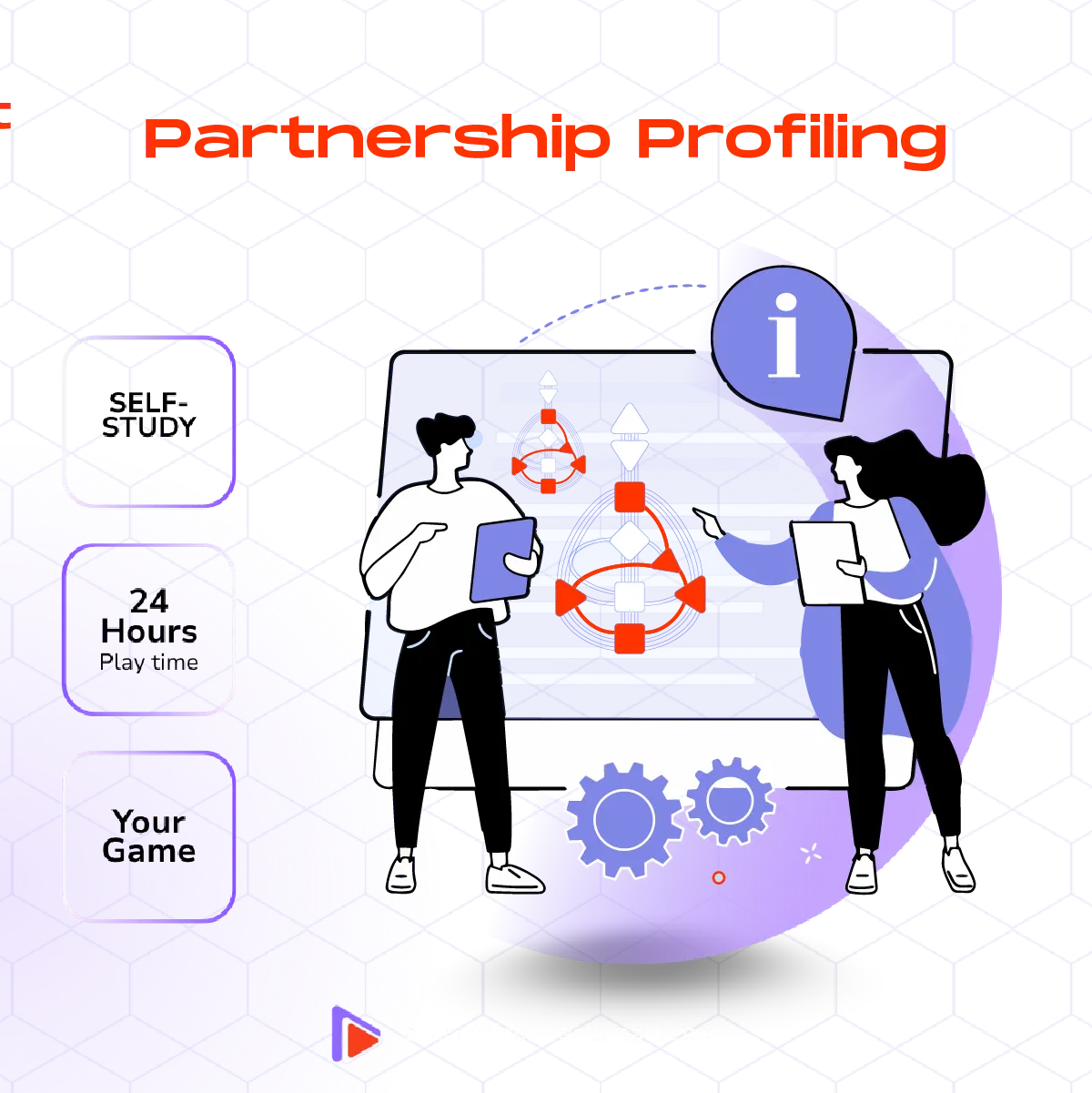
BG5 identifies four distinct types of mechanical interaction that govern the energetic quality of any partnership connection, each producing a characteristic relational dynamic.
The Electromagnetic connection is perhaps the most immediately recognizable. It arises when one partner holds a gate at one end of a channel and the other partner holds the gate at the opposite end — when the two incomplete activations, brought into proximity, complete each other. The result is a spark: a quality of attraction and fascination that draws the partners together with a force that neither fully understands. The Electromagnetic connection is the chemistry that makes early partnerships feel electric, that creates the sense of mutual recognition and completion that distinguishes a truly compelling collaboration from a merely functional one.
But the framework is honest about the arc of this dynamic. The very quality that generates the initial attraction — the fact that the other person completes something in you that you do not carry consistently yourself — becomes, over time, the source of friction. What was fascinating becomes, potentially, intrusive. The partner who provided the missing piece of the channel becomes the partner who is always there, always activating that part of you, always in the circuit in a way that was once exhilarating and eventually feels inescapable. The Electromagnetic connection does not resolve into pure harmony; it maintains its tension as the price of its vitality.
The Dominance connection operates through a different mechanism. Here, one partner carries an entire channel — both gates defined — while the other has no activations in either gate. The partner with the full channel has a consistent, reliable life force in that domain; the partner without it catches a glimpse of what it looks like to carry that hardwiring. Dominance connections generate a characteristic quality of admiration and learning: the partner without the channel encounters a way of functioning that is simply unavailable to them from within their own design, and this encounter becomes, at its best, a source of respect and development. There is a natural mentorship quality to Dominance connections, though the learning tends to flow more clearly in one direction than in the other.
The Compromise connection — the Thorn — is the most mechanically difficult of the four types, and the framework does not soften its description. It arises when one partner carries a full channel and the other carries only one of its two gates. The partner with the single gate finds themselves in the circuit but unable to control its energy flow; the full channel of the other partner determines the dynamic, and the single-gate partner is, structurally, at the mercy of something they can influence but cannot govern. The felt experience of this connection, without awareness, tends toward resentment: the persistent sense of being partially in and partially out, of almost having something that is never fully available, of being consistently shaped by a dynamic one did not choose and cannot change. With awareness, the Thorn can be held consciously — acknowledged for what it is rather than experienced as a personal failing or a sign of fundamental incompatibility. But it does not become comfortable. It remains the Thorn.
The Companionship connection — both partners sharing the same channel or gate definition — provides what the framework evocatively calls the comfortable sofa: the settled, secure, familiar quality of encountering in another person something you already know in yourself. Companionship connections provide stability, the felt sense that here is someone who understands, who operates on the same frequency, who does not require constant translation. This is genuinely valuable, particularly in domains where shared values or shared operational style matters more than complementary difference. But the framework notes its limitation with characteristic precision: the comfortable sofa, while supportive, does not stimulate. Partnerships built predominantly on Companionship connections may find themselves stable but professionally static — missing the productive friction and mutual discovery that the other connection types, for all their difficulty, reliably generate.
BG5 offers several archetypal examples of how these connection dynamics manifest in specific business contexts, each illuminating a different dimension of how partnership mechanics translate into organizational reality.
The Materialist archetype — built around the 45-21 channel — describes the essential partnership of material authority and executive management. Gate 45, the Owner, carries the vision and the ultimate authority over the organization’s resources; it is the gate of the one who owns the factory. Gate 21, the President, carries the active ego that translates that authority into operational reality — managing the daily functioning, the personnel, the systems through which the organization actually runs. In an electromagnetic or dominance connection between these two gates, the partnership produces the complementary dynamic that material leadership requires: the one who holds the vision and the one who executes it, each providing what the other cannot fully supply.
The Transmitter archetype — built around the 26-44 channel — describes the essential partnership of sales and pattern recognition. Gate 44, the Personnel Manager, operates through instinctive memory, recognizing patterns in people and situations with a speed and accuracy that bypasses conscious analysis. Gate 26, the Marketer, applies ego willpower to the task of persuasion — selecting the right message, the right moment, the right angle of approach to move a product or idea into the market. Together, these gates constitute the frontage of an enterprise: the partnership that brings in the money that allows everyone else to do their work.
The Master and Apprentice archetype — built around the 48-16 channel — describes the partnership of depth and application, of foundational expertise and enthusiastic refinement. Gate 48 carries the solutions, the corrective insights, the deep reservoirs of knowledge that the framework associates with the Well. Gate 16 carries the enthusiasm and the repetitive practice that transforms depth into demonstrable, transmissible talent. This is the connection that makes genuine mentorship possible — not the transfer of information from one person to another, but the alchemical process by which depth becomes skill through the medium of the relationship itself.
Among all partnership archetypes, BG5 identifies one as particularly foundational for the future of professional coordination: the connection between an Advisor (the Projector type in Human Design) and a Builder (the Generator type). This is not one archetype among equals — it is described as the essential partnership, the pairing around which the emerging model of productive human collaboration is organized.
The mechanics are precise. The Builder carries sustainable generative life force: the capacity for sustained work, for the kind of endurance that long-term projects require, for the deep satisfaction that comes from engaging fully with a task over time. But the Builder’s energy is not self-directing in the same way a Manifestor’s energy is; without guidance, it can be redirected, dissipated, spent on paths that do not lead where the Builder intends to go. The Advisor carries no comparable generative motor, but carries something else: a penetrating quality of perception, the organizational intelligence to see how systems and people can be most efficiently arranged, and a natural orientation toward guidance and recognition rather than sustained individual output.
The partnership works when the protocol is honored. The Builder must respond — must allow the Advisor’s questions and observations to land, to be felt in the body’s response rather than immediately evaluated by the mind. The Advisor must wait for recognition and invitation rather than imposing guidance on a Builder who has not indicated readiness to receive it. When these conditions are met, the partnership generates something that neither type can produce independently: the combination of sustainable energy and reliable direction that makes long-term productive endeavor possible.
When the conditions are not met — when the Advisor pushes guidance that was not invited, or when the Builder ignores the Advisor’s perceptions in favor of their own momentum — the partnership loses its coherence. The energy is still present, but it is no longer efficiently directed. The Advisor becomes frustrated by the sense of being overlooked; the Builder becomes exhausted by the sense of moving without a compass.
What BG5 partnership analysis ultimately reveals is that the quality of a business relationship is not primarily a matter of intention or effort or compatibility of values. It is a matter of mechanics — of what the composite field actually contains, how the connection types distribute across the partnership’s shared channels, and whether each individual is operating in alignment with their own nature within the third thing that their integration produces.
Some partnerships are built on the electric tension of electromagnetic connection, and they will always carry that tension — its gift and its demand inseparable. Some partnerships offer the comfortable ground of companionship, and they will need to seek stimulation elsewhere to avoid the quietude of stagnation. Some partnerships include the Thorn of compromise, and they will require the particular awareness of people who can name what is happening without needing it to resolve into something it cannot be.
Clarity, in the BG5 framework, is not the elimination of difficulty. It is the accurate perception of what is actually present — the mechanics of the third thing that emerges whenever two auras integrate, with all its attractions and frictions and gifts and challenges, seen clearly enough to be worked with rather than unconsciously suffered. When partners understand what they have built between them, they can stop trying to change it into something else and start learning to navigate it with the intelligence that accurate perception makes possible.
BodyGraph

No spam. No subscription needed.









“Born Alan (Robert) Krakower in Montreal, Canada April 9, 1948. He disappeared in 1983 and re-emerged as Ra on the Island of Ibiza and began a process of mystical deconstruction climaxing with his encounter with the “Voice.” Titled ‘Uru Hu’ by the “Voice,” Ra’s encounter and education lasted from January 3-11, 1987.”